Blog
Michelle Randolph Biography: Career, Movies, TV Shows and Rise to Fame


Michelle Randolph has become a recognizable name among television and film audiences through a combination of modeling, television drama, and increasingly prominent film roles. Born in California in 1997, Randolph began her professional journey in modeling before moving further into acting. Her career gained significant attention after she was cast as Elizabeth Strafford in Taylor Sheridan’s 1923, where she appeared alongside major performers including Harrison Ford and Helen Mirren. She subsequently joined Landman, another Taylor Sheridan production, playing Ainsley Norris, and later appeared in Scream 7. These projects have helped establish Michelle Randolph as a young actress whose career is expanding across television and film.
Who Is Michelle Randolph?
Michelle Randolph is an American actress and model whose entertainment career began before her most widely recognized television performances. She was born on September 11, 1997, in California and grew up in the state before attending Arizona State University, where she studied film and media studies and graduated in 2023. Her early professional experience included modeling, and she signed with Wilhelmina Models in 2016. Acting eventually became a major part of her career, with early credits including House of the Witch, A Snow White Christmas, and 5 Years Apart. Her later television work gave her a substantially larger platform and introduced her to international audiences.
Michelle Randolph and 1923
One of the defining projects in Michelle Randolph’s career has been 1923, the Yellowstone prequel created by Taylor Sheridan. Randolph portrayed Elizabeth Strafford, a young woman whose story becomes closely connected with the Dutton family. The role placed her opposite established stars such as Harrison Ford and Helen Mirren and required her to work within the demanding historical setting of the series. Randolph has discussed the extensive preparation involved in joining the production, including learning horseback riding for the role. Her performance in 1923 became an important step in her transition from emerging actress to a performer with a major television credit.
The significance of 1923 for Randolph’s career extends beyond simply being a popular television role. The production gave her the opportunity to work within one of television’s most recognizable modern Western franchises while developing a character with an extensive emotional journey. Her Elizabeth Strafford performance required her to portray a woman dealing with relationships, hardship, uncertainty, and the difficult realities of life in the early twentieth century. Randolph has also spoken about the experience of working alongside Ford and Mirren, describing the environment as an extraordinary opportunity early in her television career.
Michelle Randolph in Landman
After 1923, Randolph continued her association with Taylor Sheridan by joining Landman. In the series, she plays Ainsley Norris, the daughter of Tommy Norris, portrayed by Billy Bob Thornton. Landman shifts away from the historical Western setting of 1923 and focuses on the contemporary oil industry in West Texas. This allowed Randolph to demonstrate a different side of her acting abilities and work with another major ensemble cast.
Randolph has explained that preparing for Ainsley involved developing the character carefully and working on her Texas accent with a dialect coach. She also immersed herself in aspects of Texas culture to make the character feel authentic. Her performance demonstrates how her career has expanded from historical drama into contemporary television, giving audiences an opportunity to see her handle substantially different characters and settings.
Michelle Randolph Movies and Other Acting Work
Although television has played a particularly important role in Randolph’s rise to recognition, her filmography also includes several projects. Her early acting credits included House of the Witch in 2017 and A Snow White Christmas in 2018, followed by 5 Years Apart in 2019 and The Resort in 2021. She also appeared in The Throwback and later took a role in Scream 7, expanding her work into another major film franchise.
Her film and television choices show a career that has gradually broadened rather than relying on one particular genre. Beginning with smaller productions and modeling, Randolph moved into a high-profile historical drama, then a contemporary television series, and subsequently major film work. This progression has made her career particularly interesting to audiences who first discovered her through 1923 or Landman and want to learn more about her earlier projects.
Michelle Randolph’s Modeling Background
Before becoming widely known as an actress, Randolph had experience in modeling. She signed with Wilhelmina Models in 2016, giving her an early introduction to the professional entertainment industry. Modeling provided experience in front of cameras and within fashion and commercial environments, while acting eventually became the central focus of her career.
The transition from modeling to acting is a path followed by many performers, but Randolph’s career illustrates how the two areas can complement each other. Her modeling experience gave her familiarity with professional sets and visual storytelling, while her film and media studies education provided an academic foundation connected to the entertainment industry. Her subsequent television roles allowed her to develop beyond visual presentation and concentrate on character development and performance.
Michelle Randolph’s Education and Early Life
Randolph grew up in California and later attended Arizona State University, where she studied film and media studies. She completed her degree in 2023, even as her acting career was already developing through her work in 1923. Her education is notable because it connects directly with the industry in which she eventually established herself.
Her family has also attracted public attention because her older sister is Cassie Randolph, who became known through The Bachelor. The Randolph sisters have both pursued careers connected to entertainment and entrepreneurship, although their professional paths have developed in different directions. Michelle has concentrated primarily on acting and modeling, while Cassie became known through reality television and other ventures.
What Makes Michelle Randolph’s Career Interesting?
Michelle Randolph’s career is notable for the relatively quick transition from early modeling and smaller acting projects into prominent television productions. Her role in 1923 introduced her to a large audience, while Landman demonstrated that she could move into a contemporary dramatic setting. Her participation in Scream 7 further expanded her filmography and connected her with another established entertainment franchise.
Another interesting aspect of Randolph’s career is her repeated collaboration with Taylor Sheridan. After appearing in 1923, she returned to Sheridan’s television world with Landman. In interviews, Randolph has discussed the appeal of Sheridan’s character-driven storytelling and the collaborative environment surrounding his productions. Her growing association with these projects has consequently become an important part of how audiences understand her professional development.
Michelle Randolph’s Growing Hollywood Profile
As Randolph has taken on increasingly prominent roles, interest in her professional life has naturally expanded. Entertainment publications have profiled her career, her work on 1923 and Landman, and her transition from modeling into acting. At the same time, Randolph has emphasized her interest in acting and character work rather than allowing celebrity attention to become the sole focus of her public identity.
Her career demonstrates how a performer can build recognition gradually through several different forms of entertainment work. Instead of appearing suddenly in a major production without previous experience, Randolph spent years working in modeling and smaller acting projects before landing the role that significantly changed the scale of her career. That background provides useful context for understanding why 1923 and Landman became such important milestones.
Conclusion
Michelle Randolph has developed an increasingly visible career through modeling, television, and film. From her early work with Wilhelmina Models and smaller acting projects to her breakthrough as Elizabeth Strafford in 1923, she has steadily built professional experience. Her subsequent role as Ainsley Norris in Landman gave her another major television opportunity, while Scream 7 added an important film credit to her growing résumé.
Today, Michelle Randolph is best recognized for the combination of these projects and for her continued development as an actress. Her career remains closely associated with the modern television work of Taylor Sheridan, while her film appearances demonstrate an expanding range of opportunities. For audiences discovering her through 1923, Landman, or Scream 7, her earlier modeling and acting history provides useful context for understanding how she reached her current position in the entertainment industry.
Frequently Asked Questions
Who is Michelle Randolph?
Michelle Randolph is an American actress and model known particularly for her roles as Elizabeth Strafford in 1923 and Ainsley Norris in Landman. She has also appeared in several films, including Scream 7.
What is Michelle Randolph famous for?
She is best known for her television roles in 1923 and Landman. Her work in Scream 7 has also expanded her recognition as a film actress.
Who did Michelle Randolph play in 1923?
Michelle Randolph played Elizabeth Strafford, a major character connected to the Dutton family storyline.
Who does Michelle Randolph play in Landman?
She plays Ainsley Norris, the daughter of Tommy Norris, portrayed by Billy Bob Thornton.
Did Michelle Randolph work as a model?
Yes. Randolph signed with Wilhelmina Models in 2016 before developing her acting career.
What did Michelle Randolph study?
She studied film and media studies at Arizona State University and graduated in 2023.
What movies has Michelle Randolph appeared in?
Her film credits include 5 Years Apart, The Resort, The Throwback, and Scream 7, along with earlier television-film projects.
Is Michelle Randolph related to Cassie Randolph?
Yes. Michelle Randolph is the younger sister of Cassie Randolph, who became widely known through The Bachelor.
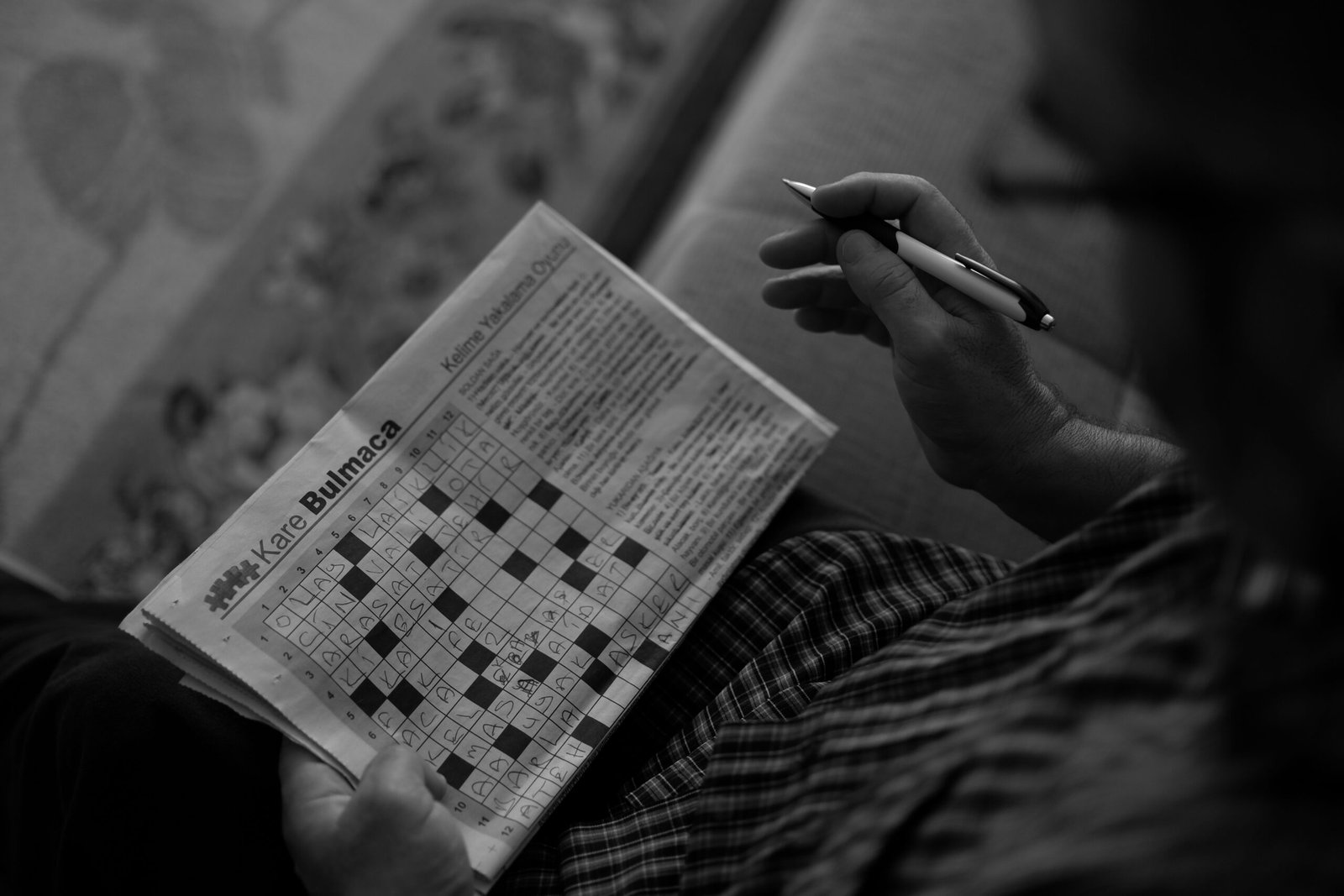
A people crossword can be one of the most interesting types of crossword puzzle because its clues can cover a remarkably wide range of subjects. Instead of focusing only on ordinary vocabulary, a people-themed crossword may ask about famous actors, musicians, athletes, historical figures, political leaders, writers, fictional characters, occupations, nicknames, or even everyday terms used to describe groups of people. This variety makes a people crossword both entertaining and challenging. A clue that appears simple at first can become difficult when several possible names or descriptions seem to fit the available spaces. The key to solving these puzzles successfully is learning how to recognize clue patterns, use crossing letters, understand wordplay, and avoid committing too early to an answer.
For beginners, people crossword clues can sometimes feel harder than clues involving common objects, places, or definitions. Names may have unusual spellings, abbreviated forms, initials, or references to events that are not immediately familiar. Experienced solvers, however, learn that crossword puzzles have their own language and conventions. The number of letters, grammatical form, tense, abbreviations, and crossing answers can provide valuable information even when the subject of the clue is unfamiliar. This guide explains how to approach a people crossword puzzle, how to work through difficult clues, how to use surrounding answers, and how to improve your solving skills without relying on random guesses.
What Is a People Crossword?
A people crossword is a crossword puzzle that contains clues or answers connected to people. The word “people” can refer to actual individuals, groups, professions, relationships, titles, or descriptions of human beings. Depending on the puzzle, you might encounter clues about celebrities, historical personalities, sports stars, authors, musicians, television personalities, political figures, scientists, artists, or fictional characters. Other clues may simply ask for words such as “teacher,” “parent,” “neighbor,” or “citizen.” Because the category is broad, the exact difficulty of a people crossword depends heavily on the puzzle’s theme and the knowledge required by its clues.
One reason this puzzle format is appealing is that it combines general knowledge with traditional crossword mechanics. A solver does not necessarily need to recognize every person mentioned in a puzzle. Even if a particular name is unfamiliar, crossing letters can reveal most of the answer. For example, if a clue asks for a five-letter surname and the grid provides three letters, the possible answers become much more limited. In this way, the crossword grid itself acts as a source of information. Understanding how to use that information is often more important than knowing every famous person in history.
Why People Crossword Puzzles Can Be Challenging
The biggest challenge with a people crossword is that names do not always behave like ordinary vocabulary. A common word usually has a recognizable definition and a relatively predictable spelling, while a person’s name may have multiple spellings, unusual vowels, shortened forms, initials, or a surname that is much more recognizable than the first name. A clue might also refer indirectly to someone rather than simply providing an obvious description. This means that solvers need to think beyond straightforward definitions.
Another challenge is the changing nature of popular culture. A puzzle published decades ago may contain names that were extremely recognizable at the time but are less familiar to modern readers. Conversely, a newer puzzle might mention contemporary entertainers, athletes, online personalities, or public figures who were not widely known in previous generations. This is one reason a broad knowledge base can be useful, but it is not essential. Good crossword technique allows you to solve many clues through structure and deduction rather than pure memory.
How to Solve People Crossword Clues
The best way to approach people crossword clues is to begin with the clues that seem easiest. Do not feel obligated to solve the puzzle from the first clue to the last. Crossword grids are designed so that answers help reveal other answers, creating a chain of deductions. Start with straightforward clues where you are confident about the answer, enter those words into the grid, and then return to the more difficult clues. The letters you gain from the completed answers can dramatically reduce the possibilities for unfamiliar names.
Pay close attention to the wording of every clue. Crossword clues are usually carefully constructed, and small details can provide important information. If the clue is written in the past tense, the answer may need to be in the past tense. If the clue appears to be plural, the answer may also be plural. A question mark can sometimes signal wordplay or a less literal interpretation. Abbreviations may also be indicated by the wording of the clue. Recognizing these conventions can turn an apparently impossible clue into a manageable one.
Use Crossing Letters to Find People Crossword Answers
Crossing letters are among the most powerful tools available to anyone working on a people crossword puzzle. Suppose you have a clue asking for a person’s surname and the answer has seven letters. If you know the second, fourth, fifth, and seventh letters because of completed crossing answers, you can often identify the name even if you did not initially recognize the clue. This is why it is usually better to leave an uncertain answer blank rather than forcing a guess that could interfere with several other answers.
Crossing letters are particularly valuable when dealing with famous names. A clue might immediately remind you of several possible people, but the grid can tell you which one is correct. For instance, if three well-known people could fit the general description, the pattern of letters may eliminate two of them. The crossword is therefore not simply a test of memory; it is a logical system in which every correct answer provides evidence for other answers.
Learn Common Crossword Abbreviations
Many people crossword clues use abbreviations because crossword grids have limited space. Titles, professional positions, organizations, and names may appear in shortened forms. Common abbreviations can include titles such as “Mr.,” “Dr.,” or “Rev.,” depending on the puzzle’s conventions. You may also encounter shortened occupational terms, initials, or abbreviated names.
The exact conventions vary between crossword publications, so it is useful to become familiar with the style of the puzzle you are solving. If a clue seems oddly short or strangely worded, consider whether it may be asking for an abbreviation rather than a complete word. This simple habit can save considerable time.
Famous People in Crossword Puzzles
Famous people are a natural subject for people crossword puzzles because their names can provide distinctive answers. Historical figures, entertainers, athletes, writers, scientists, artists, and political leaders are all common possibilities. However, fame is relative, and a crossword clue may assume knowledge from a particular field or era.
When solving a clue about a famous person, first identify the category. Ask yourself whether the clue appears to refer to an actor, singer, athlete, author, historical figure, politician, scientist, or another type of public figure. Then consider the length of the answer and any known letters. If the clue includes a date, location, profession, famous work, team, film, book, or achievement, use that information to narrow the possibilities.
People Crossword Clues About Occupations
Not every people crossword clue is about a famous individual. Many clues describe people by their occupations or roles. Examples might involve professions, trades, family relationships, social roles, or positions within an organization. These clues are often easier because the answer is a general vocabulary word rather than a proper name.
When encountering this type of clue, think about synonyms. Crossword constructors frequently choose a word that is slightly different from the first answer that comes to mind. If “doctor” does not fit the grid, possibilities such as “physician” or another related term may be worth considering, depending on the number of spaces and crossing letters. The answer must fit both the clue’s meaning and the grid’s structure.
Pay Attention to the Number of Letters
The length of an answer is one of the most useful pieces of information in any people crossword. A clue may seem to have several possible answers, but the number of spaces can immediately eliminate many choices. This becomes especially important with names, where a single letter can distinguish between several people with similar descriptions.
Always count the spaces carefully before deciding on an answer. If the clue asks for a surname and the grid requires eight letters, do not force a six-letter name simply because it is the first person you recognize. Likewise, if the clue requires a three-letter answer, think about initials, abbreviations, nicknames, or short forms. Crossword constructors deliberately use answer lengths to guide solvers.
Avoid Guessing Too Early
One of the most common mistakes in solving a people crossword puzzle is becoming attached to an answer before enough evidence exists. You might recognize a clue and immediately write down a name, only to discover later that one of the crossing answers does not work. This can create a chain of incorrect answers that makes the puzzle much harder to finish.
A better strategy is to treat uncertain answers as possibilities rather than facts. If you think a particular name is correct but only have one crossing letter, keep it tentative. As more letters appear, confirm or reject the answer. This approach keeps the grid flexible and prevents one questionable guess from creating several additional problems.
How Beginners Can Improve at People Crossword Puzzles
Beginners should focus on learning crossword-solving habits rather than trying to memorize hundreds of names. Start with easier puzzles and gradually move toward more difficult ones. When you encounter an unfamiliar answer, study it after completing the puzzle. Over time, repeated exposure to common crossword words, names, abbreviations, and clue structures will make future puzzles easier.
It can also help to keep a personal list of unfamiliar names and recurring crossword answers. You may notice that certain surnames, occupations, abbreviations, and cultural references appear repeatedly across different puzzles. Learning these patterns gives you an advantage because crossword construction often relies on a relatively familiar vocabulary of short, flexible answers.
How Experienced Solvers Approach Difficult Clues
Experienced solvers usually do not stare at one difficult clue indefinitely. Instead, they move around the grid and search for additional information. If an answer is unclear, they solve surrounding clues to obtain crossing letters and then return to the difficult clue. This process gradually transforms uncertainty into a pattern that is much easier to recognize.
Another useful technique is to reconsider the clue from different angles. A clue that appears to request a person’s name might actually be asking for a title, nickname, occupation, or word associated with that person. Similarly, a clue that seems to have an obvious literal meaning may use wordplay. Remaining flexible is one of the most important skills in advanced crossword solving.
Common Mistakes When Solving a People Crossword
A frequent mistake is assuming that every clue about a person must produce a person’s full name. Depending on the puzzle, the answer could be a first name, surname, nickname, title, profession, or another associated term. Another common mistake is ignoring grammar. Singular and plural forms, verb tense, and adjective forms can all matter. A technically related answer may still be incorrect if it does not match the grammatical structure of the clue.
Another problem is failing to use the grid as evidence. Crossword solving should be an interactive process in which answers continuously confirm one another. If an answer creates several impossible crossing letters, it is probably wrong even if it initially seemed convincing. Good solvers are willing to erase an answer and reconsider it when the evidence changes.
People Crossword Strategies for Faster Solving
Speed comes naturally with familiarity, but several techniques can make solving more efficient. Begin by scanning the entire puzzle and identifying clues that you can answer immediately. Fill those in first. Next, use the resulting letters to solve medium-difficulty clues. Leave the most obscure names and wordplay clues until you have more information.
It is also helpful to recognize recurring clue patterns. If you frequently solve crosswords, you will encounter similar structures again and again. Learning how clues signal abbreviations, plurals, names, quotations, wordplay, and alternate meanings can save time. The goal is not to memorize every answer but to recognize the kind of thinking that each clue requires.
The Role of General Knowledge
General knowledge can certainly help with a people crossword, particularly when clues refer to historical figures, entertainment, sports, literature, or current culture. Reading widely can gradually expand the pool of names you recognize. However, crossword skill and general knowledge are not identical. A person with extensive knowledge can still struggle if they do not understand crossword conventions, while an experienced solver can often complete difficult puzzles despite not recognizing every reference.
The strongest approach combines both. Learn about the world while also learning how crossword clues work. When you encounter an unfamiliar person, use the available letters and contextual clues to make an educated deduction. This makes the puzzle feel less like a memory test and more like a logical investigation.
Using Crossword Answers as a Learning Tool
Looking at people crossword answers after finishing a puzzle can be educational. Instead of simply checking whether you were right or wrong, examine why each answer worked. If you missed a person’s name, learn who that person was and why they were relevant to the clue. If you missed an abbreviation, make a note of it. If the answer depended on wordplay, study how the clue was constructed.
This turns every puzzle into practice for the next one. Over time, you will develop a personal mental database of names, phrases, abbreviations, and clue types. The result is greater confidence and faster solving.
Conclusion
A people crossword combines general knowledge, vocabulary, logic, and wordplay in a way that can be both challenging and rewarding. Although clues involving names and public figures may initially appear intimidating, the crossword grid provides powerful assistance through answer length and crossing letters. By starting with easy clues, paying attention to grammar, recognizing abbreviations, using crossing answers, and remaining willing to revise uncertain guesses, beginners can steadily become more capable solvers.
The most important lesson is that you do not need to know every person mentioned in a puzzle to solve it. Effective crossword solving is about gathering clues, testing possibilities, and allowing the grid to confirm your conclusions. Whether you enjoy casual puzzles or want to become an advanced solver, practicing people crossword clues, studying unfamiliar answers, and recognizing recurring patterns can make each new puzzle easier and more enjoyable.
Frequently Asked Questions About People Crossword
What is a people crossword?
A people crossword is a crossword puzzle containing clues related to people. The answers may include famous individuals, occupations, titles, names, nicknames, historical figures, or other words associated with human beings.
How do I solve difficult people crossword clues?
Start with the easiest clues and use their answers to obtain crossing letters. Then use the letter pattern, answer length, clue grammar, and subject category to narrow down the possibilities. Avoid committing to uncertain names too early.
Why are people crossword clues sometimes difficult?
Names can have unusual spellings, multiple possible answers, abbreviations, nicknames, or references to people from specialized fields. The puzzle may also assume knowledge of a particular period, profession, sport, entertainment category, or historical subject.
Are people crossword answers always names?
No. A people-themed clue may produce a first name, surname, nickname, occupation, title, relationship, group description, or another word connected with people.
What is the best strategy for a people crossword puzzle?
The most effective strategy is to solve the clues you know first, enter those answers into the grid, and then use the resulting crossing letters to solve harder clues. Always consider the number of letters and the exact wording of the clue.
Can beginners solve people crossword puzzles?
Yes. Beginners can successfully solve people crossword puzzles by starting with easier grids and gradually learning common crossword conventions, abbreviations, vocabulary, and recurring names. Practice is one of the best ways to improve.
Should I use crossword answer tools?
Answer tools can be useful when you are completely stuck, but using them for every difficult clue can limit learning. A better approach is to attempt the clue using crossing letters and deduction first, then check the answer afterward to learn from it.
How can I get faster at solving people crossword clues?
Practice regularly, learn common crossword patterns, build familiarity with names and abbreviations, and use crossing letters efficiently. With repeated practice, you will recognize clue structures more quickly and spend less time on difficult answers.

People Crossword: A Complete Guide to Solving People-Themed Crossword Clues

Michigan Man $1M Lottery Win: What Happened and How the Million-Dollar Prize Was Won

Michelle Randolph Biography: Career, Movies, TV Shows and Rise to Fame

The Ultimate Guide to Watching “Трон Смотреть”: Exploring the Digital Frontier

The Ultimate Guide to IRB SDSU: Navigating Human Subjects ResearchThe Ultimate Guide to IRB SDSU: Navigating Human Subjects Research at San Diego State Universityat San Diego State University

Gravity Points: The Complete Guide to Understanding and Calculating Wort Strength in Homebrewing
 Entertainment3 months ago
The Ultimate Guide to Watching “Трон Смотреть”: Exploring the Digital Frontier
- Tech3 months ago
The Ultimate Guide to IRB SDSU: Navigating Human Subjects ResearchThe Ultimate Guide to IRB SDSU: Navigating Human Subjects Research at San Diego State Universityat San Diego State University
- art3 months ago
Gravity Points: The Complete Guide to Understanding and Calculating Wort Strength in Homebrewing
- Entertainment3 months ago
Renee Andrietti: The Woman Behind Rock Legend Bob Seger’s First Marriage
- Fashion3 months ago
Constantine Yankoglu: The Private Life Behind a Name People Keep Searching
- Fashion3 months ago
Michelle Smallmon’s Marital Status: A Deep Dive into the Private Life of ESPN’s Rising Star
- Business3 months ago
Voozon.com: The All-in-One Digital Growth Platform for Modern Businesses
- Gaming3 months ago
The Ultimate Guide to Kaddun Drag Blocks: Mastering the Art of Strategic Puzzle Gaming