Connect with us

Travel

Newton Hills State Park: South Dakota’s Best-Kept Secret for Hiking, Wildlife, and Solitude

Published

on

newton hills

Introduction

Tucked away in the southeastern corner of South Dakota, Newton Hills State Park sits like a well-kept secret, a forested island rising dramatically from the surrounding prairie and farmland. It is a place where the landscape defies expectations. When most people picture South Dakota, they envision the stark, otherworldly beauty of the Badlands or the endless, waving grasslands of the Great Plains. But here, just a short drive from Sioux Falls, the narrative shifts entirely. You are enveloped in a dense, cathedral-like forest of ancient oaks and maples, rolling hills, and quiet creek valleys that feels more like the north woods than the Great Plains . This park is not just a destination; it is an experience, offering a rare combination of accessibility and profound solitude that makes visitors feel they have discovered a hidden realm. Unlike the state’s more frequented tourist hotspots, Newton Hills is the place where the locals go to escape, a sanctuary where you can genuinely get away from it all. This article will serve as your comprehensive guide to this underrated paradise. We will delve into the heart of its extensive trail system, explore the rich diversity of its wildlife, and uncover the recreational opportunities that make it a perfect escape for families, adventurers, and nature lovers alike. Whether you are seeking a challenging hike, a peaceful campsite under the stars, or simply a quiet spot to reconnect with nature, Newton Hills State Park is a destination that promises to linger in your memory long after you’ve left its peaceful confines.

A Landscape of Surprises: The Geography of Newton Hills

The magic of Newton Hills begins with its very existence. The park is perched on the Coteau des Prairies, a glacial plateau that rises approximately 170 feet above the Big Sioux River Valley . This geological feature acts as a forested island in a sea of agricultural land, creating a unique microclimate that supports a diverse ecosystem. As you drive into the park, the transition is sudden and dramatic; one moment you are surrounded by flat, orderly farm fields stretching to the horizon, and the next, you are climbing into a lush, dense forest. The change is so abrupt, it feels as though you have crossed a border into a different state. This immediate immersion in nature has a psychological effect, creating a clear boundary that helps visitors leave the worries of everyday life behind . The hills themselves are a testament to ancient glacial forces, and walking the trails is a literal journey through the region’s deep geological history. This unique topography is the foundation upon which the park’s rich natural character is built, influencing everything from the towering canopy of bur oaks, basswood, and maples to the delicate wildflowers that carpet the forest floor in the spring .

Exploring the Trails: A Journey for Every Hiker

The trail system is perhaps the greatest asset of Newton Hills State Park, offering over seven miles of well-maintained paths that showcase the park’s diverse environments. The trails are thoughtfully designed to be accessible yet engaging, providing options for everyone from families with young children to seasoned hikers seeking a good workout .

The Signature Woodland Trail: Stretching for three miles, this is the park’s signature loop. It takes you deep into the heart of the forest, winding through various communities of trees and offering interpretive signs that help identify the flora and explain the forest ecosystem’s complex dynamics . This trail is particularly stunning in the spring when the forest floor transforms into a living mosaic of ephemeral wildflowers like trillium, bloodroot, and jack-in-the-pulpit . In the summer, the dense canopy creates a cool, green tunnel, with the temperature dropping significantly compared to open areas. In autumn, this trail becomes a spectacular display of fiery reds, oranges, and yellows .

The Scenic South Dakota Trail: For those seeking breathtaking views, the 1.5-mile South Dakota Trail is a must. This path climbs to several overlooks that provide sweeping panoramic vistas of the surrounding Big Sioux River Valley and the patchwork of farms beyond . It is a moderately challenging climb, but the reward is well worth the effort. These vantage points are particularly magical at sunset, where the low-angle light bathes the entire landscape in a golden hue, creating long shadows and making the topography appear as a living map before your eyes .

The Gentle Hidden Hill Trail: This one-mile trail is the perfect choice for a leisurely stroll or a family-friendly outing. It meanders through a mix of woodland edges and small prairie openings, offering a taste of both ecosystems. This path is ideal for wildlife observation, as these “edge habitats” are often hotspots of biodiversity where different species converge . The interconnecting nature of the trail system allows you to easily customize your route, combining segments of different trails to create a hike tailored to your time and fitness level .

A Sanctuary for Wildlife: Birding and Nature Watching

Beyond the trees, one of the most compelling draws of Newton Hills is its incredible wildlife. The park’s unique woodland habitat supports an array of animals that are not commonly seen in other parts of South Dakota, making it a genuine hotspot for nature enthusiasts and photographers . White-tailed deer are abundant and are often spotted browsing at forest edges during the early morning and evening hours. Wild turkeys strut through the underbrush, and with patience, you might catch a glimpse of a red or gray fox.

For birders, Newton Hills is nothing short of spectacular. The park is perhaps best known for its population of the magnificent pileated woodpecker, a crow-sized bird with a striking flaming red crest that looks like it belongs in a tropical jungle. Their powerful, rhythmic drumming echoes through the forest, and spotting one is an unforgettable experience . The park is also home to barred owls, whose distinctive “who-cooks-for-you” calls can often be heard, even during the day. During the spring, the forest canopy becomes a highway for migrating warblers, creating a colorful and energetic display. The park’s low visitation numbers mean that you are likely to have these wildlife encounters without the interruption of crowds, allowing for a truly immersive experience .

Camping Under the Canopy: A Night in the Woods

To truly appreciate Newton Hills, one must stay overnight. Camping here transforms a day trip into an immersive experience, allowing you to connect with the park’s natural rhythms as day turns to night. The park offers 118 well-maintained campsites spread across several areas, ranging from basic, secluded tent sites to spots with electrical hookups for RVs . What sets Newton Hills apart from many typical campgrounds is how thoughtfully the sites are integrated into the natural environment. Tucked among the trees, they provide natural screening and a sense of privacy that makes you feel like you have your own woodland nook . Amenities include modern comfort stations with hot showers and flush toilets during the warm season, offering a comfortable balance between adventure and convenience.

For those who prefer a roof over their heads, the park also features two rustic camping cabins. These are particularly popular during the shoulder seasons of spring and fall, or for families with young children beginning their outdoor adventure . The park remains open for camping year-round, though water systems are shut down during the winter months. Each season brings a unique character to the camping experience: from the vibrant greenery and warm evenings of summer, to the spectacular kaleidoscope of fall colors, and the pristine, silent solitude of a snow-draped winter forest .

Year-Round Recreation: More Than Just Hiking

Newton Hills State Park is a four-season destination that offers a broad range of recreational opportunities beyond its hiking trails. For day visitors, several well-equipped picnic areas offer perfect settings for family gatherings, with tables, fire grates, and nearby restrooms, some offering scenic views or quiet forest clearings . The park maintains equestrian trails for those who wish to explore the woods from a different perspective, connecting with the landscape as early settlers might have .

When winter arrives, the park transforms into a cold-weather playground. The hiking trails are converted into routes for cross-country skiing, offering a serene and magical way to glide through the silent, snow-covered forest. Snowshoeing is another excellent way to explore the winter landscape, and the park occasionally offers rentals to make the activity accessible to everyone . The park also hosts naturalist-led interpretive programs throughout the year, from wildflower walks in spring to night hikes in summer and fall color tours. These programs enrich the visitor experience, turning a simple walk into an educational journey into the heart of the forest .

Conclusion

In a world that is increasingly fast-paced and crowded, Newton Hills State Park stands as a testament to the enduring power of quiet, natural spaces. It is South Dakota’s best-kept secret, a place where the drive off the beaten path leads to a profound reward: a genuine escape. This park proves that sometimes the most extraordinary places are not the famous ones, but those that are hidden in plain sight, waiting for those willing to venture beyond the well-traveled roads. Newton Hills offers not just a destination, but a feeling—the peace of a shaded forest trail, the thrill of hearing a pileated woodpecker’s call, the joy of a campfire under a canopy of stars. Whether you are a resident of the region or a traveler passing through, a visit to this forested sanctuary is a chance to slow down, breathe deeply, and reconnect with the simple, profound beauty of the natural world. It’s a place that, once discovered, will call you back to its peaceful hills again and again.

Frequently Asked Questions (FAQs)

Where is Newton Hills State Park located?

Newton Hills State Park is located near the town of Canton in southeastern South Dakota, just a short drive from the city of Sioux Falls. The physical address is 28767 482nd Ave, Canton, SD 57013 .

How many miles of hiking trails are in the park and what skill levels are they suited for?

The park features approximately seven miles of interconnected trails suitable for a range of skill levels. Popular routes include the 3-mile Woodland Trail and the 1.5-mile South Dakota Trail that offers scenic overlooks, making them accessible for moderate hikers and families .

What kind of wildlife can I expect to see at Newton Hills State Park?

The park is a haven for wildlife. Visitors frequently spot white-tailed deer and wild turkeys. Birders can look for species like the pileated woodpecker and barred owls. The park is also home to foxes and over 200 species of birds, making it excellent for photography and nature watching .

Are there camping facilities available at the park?

Yes, the park offers 118 campsites for both tent and RV camping, with some offering electrical hookups. There are modern comfort stations with showers and flush toilets available in the summer. The park also offers two rustic camping cabins for rent .

Is Newton Hills State Park open during the winter?

Yes, the park remains open for camping and recreation year-round. During the winter, the hiking trails become routes for cross-country skiing and snowshoeing, offering a unique and peaceful way to experience the park .

Continue Reading

Travel

The Many Lives of Cass Castillo: A Comprehensive Exploration of a Name with Global Significance
Published

on

The Many Lives of Cass Castillo: A Comprehensive Exploration of a Name with Global Significance

The name “Cass Castillo” might initially appear to point to a single individual, yet a deeper investigation reveals a fascinating tapestry of distinct lives spanning different continents, professions, and historical epochs. From the gridirons of American football to the high-stakes world of Peruvian politics and the complex landscapes of software engineering, the name carries a surprising weight across diverse fields. This article explores the multifaceted identity of Cass Castillo, providing a comprehensive overview of the various notable figures who share this name and the significance of their contributions to their respective domains. By examining the biographies of these individuals, from the ex-wife of a legendary quarterback to a former president and a technology leader, we gain a unique perspective on how a name can be a vessel for a wide array of human experiences and achievements .

The Celebrity Association: Cass Castillo and Joe Montana

The most widely recognized individual by the name Cass Castillo is the former spouse of Hall of Fame quarterback Joe Montana. Cass Castillo gained public prominence through her marriage to the NFL icon on July 1, 1981, which thrust her into the limelight as the second wife of the celebrated athlete. While their union was short-lived, ending in divorce in 1984, her association with Joe Montana has made her a figure of perennial curiosity, often leading to questions about her life before, during, and after their marriage. This chapter of her life has become a point of reference in popular culture, ensuring her name remains in public memory even decades later .

Born in 1960 in the United States, Cass Castillo has largely remained a private individual away from the public eye following her divorce. She holds American nationality and is of Caucasian ethnicity. Standing at 5 feet 7 inches (170 cm), she had expressed an early interest in the entertainment and modeling industry. Beyond her brief stint in the public eye, details about her family, education, and current life remain scarce, as she has chosen not to share these aspects of her personal life on social media or in public forums. With an estimated net worth of approximately $500,000 as of 2024, she has maintained a level of financial stability, though her professional life and current activities have largely been kept out of the spotlight, making her a subject of intrigue rather than a public figure in her own right .

Cass Castillo: The Software Engineering Leader

In stark contrast to the celebrity association, another Cass Castillo has established a distinguished career in the technology and banking sectors. This individual has demonstrated a remarkable trajectory in software engineering and business systems analysis, highlighting a professional life dedicated to innovation and technical leadership. As a Leader in Software Engineering at CoreLogic, a leading global property information, analytics, and data-enabled services provider, this Cass Castillo is responsible for guiding complex technical projects that are vital to the company’s operations and its support of significant corporate transitions .

The career progression of this Cass Castillo showcases a steady and impressive ascent through the ranks of the technology industry. Beginning from customer support roles, this professional has continuously evolved, taking on increasingly senior positions such as Senior Professional Business Systems Analyst, Leader Business System Analysis, and Senior Business Systems Analyst Scrum Master. This journey reflects a deep expertise in business system analysis, project management, and agile methodologies. Such a diverse and upward career path underscores the capabilities and strategic value that this Cass Castillo brings to the field of software engineering, proving that the name is associated with high-level technical acumen and leadership .

The Political Figure: Pedro Castillo and the “Castillo” Connection

While not sharing the exact first name, the surname “Castillo” has become internationally prominent in the context of Peruvian politics, drawing searches and interest to names similar to Cass Castillo. The case of former Peruvian President Pedro Castillo is a significant and complex chapter in recent South American history. From his origins as a rural primary school teacher and union leader, Pedro Castillo rose to the presidency in 2021, representing a reaction against the established political order in Peru and appealing to marginalized and poorer communities .

Pedro Castillo’s presidency was marked by intense political instability and a fraught relationship with Congress, culminating in his dramatic attempt in December 2022 to dissolve the legislature and rule by decree—a move widely described as an “autogolpe,” or a self-coup. This action immediately led to his removal from office and arrest, and a long legal battle ensued. In November 2025, he was sentenced to over eleven years in prison for rebellion and conspiracy against the state, a verdict that has significant implications for Peru’s already volatile political landscape. The sentencing, which saw him convicted of “conspiracy to commit insurrection,” has been viewed as both a defense of institutional order and a potential source of further polarization in a country where social and economic divisions remain acute .

Other Notable Figures with the Name Cass Castillo

The name “Cass Castillo,” often used as a nickname for “Castillo,” appears in various local and historical contexts, further enriching its narrative. For instance, Abel Cass Castillo of Fort Worth, Texas, was a U.S. Army veteran and a successful entrepreneur who owned both an insurance agency and a real estate brokerage. His life story reflects the American Dream, built through service to his country and a career in sales and business. Similarly, Juan H. “Cass” Castillo served in the U.S. Air Force during the Vietnam era and later became a manager for the U.S. Postal Service, dedicating his post-retirement years to serving fellow veterans through the American Legion. These individuals demonstrate the widespread use of “Cass” as a nickname for Castillo and the honorable lives led by those bearing the name .

Further research reveals a genealogy of individuals who also held this nickname. Aristeo “Cas” Castillo had a unique background that included time at Boys Town in Nebraska and service in the U.S. Army, followed by a career as a proofreader and postal carrier. Ronald “Cass” Castillo Sr. served his country in the U.S. Air Force and was known as a talented painter. Even in the realm of podcasting, a notable prosecutor named Cass Castillo is celebrated for having the most murder convictions in cases where no body was found, a grim but significant achievement. These diverse identities underscore that “Cass Castillo” is not a singular figure but a name shared across professions, generations, and geographies, each with a unique story to tell .

Conclusion

The exploration of the name “Cass Castillo” reveals a profound diversity of human endeavor and experience. It is a name that traverses the worlds of sports, technology, politics, law, and entrepreneurship, demonstrating that a simple combination of a first name and a surname can represent a multitude of distinct lives and legacies. From the fleeting fame of a celebrity ex-wife to the calculated leadership of a software engineer, and from the turbulent presidency of a political figure to the quiet service of veterans and local businessmen, the name encapsulates a broad spectrum of the human condition. For anyone researching “Cass Castillo,” understanding this rich tapestry is essential to appreciating the full scope of its meaning and the significant, though vastly different, contributions each individual has made to their respective fields. This exploration serves as a powerful reminder of the unique stories that lie behind every name and the importance of thorough research in uncovering them .

Frequently Asked Questions (FAQ)

Q1: Who is the most famous Cass Castillo?

The most publicly recognized Cass Castillo is the former wife of legendary NFL quarterback Joe Montana. They were married from 1981 to 1984, and her subsequent public curiosity stems largely from this high-profile relationship .

Q2: Are there other professional fields where the name Cass Castillo is significant?

Yes. Notably, a different Cass Castillo holds a prominent position as a Leader in Software Engineering at CoreLogic, demonstrating a successful career in the technology sector. A prosecutor named Cass Castillo is also known for a high number of murder convictions in “no-body” cases .

Q3: Does the name “Cass Castillo” have any connection to politics?

While there is no political figure named “Cass Castillo,” the surname is powerfully linked to former Peruvian President Pedro Castillo. His presidency, subsequent self-coup attempt, and recent sentencing for rebellion have brought the name “Castillo” to the forefront of international news .

Q4: Is “Cass” a common nickname for “Castillo”?

Yes, across multiple individuals and obituaries, “Cass” (or “Cas”) is frequently used as a nickname for those with the last name Castillo. This practice is seen across various regions in the United States .

Q5: What is the current status of Pedro Castillo?

As of late 2025, former Peruvian President Pedro Castillo was sentenced to more than eleven years in prison for rebellion and conspiracy related to his attempt to dissolve Congress in December 2022 .

Continue Reading

Travel

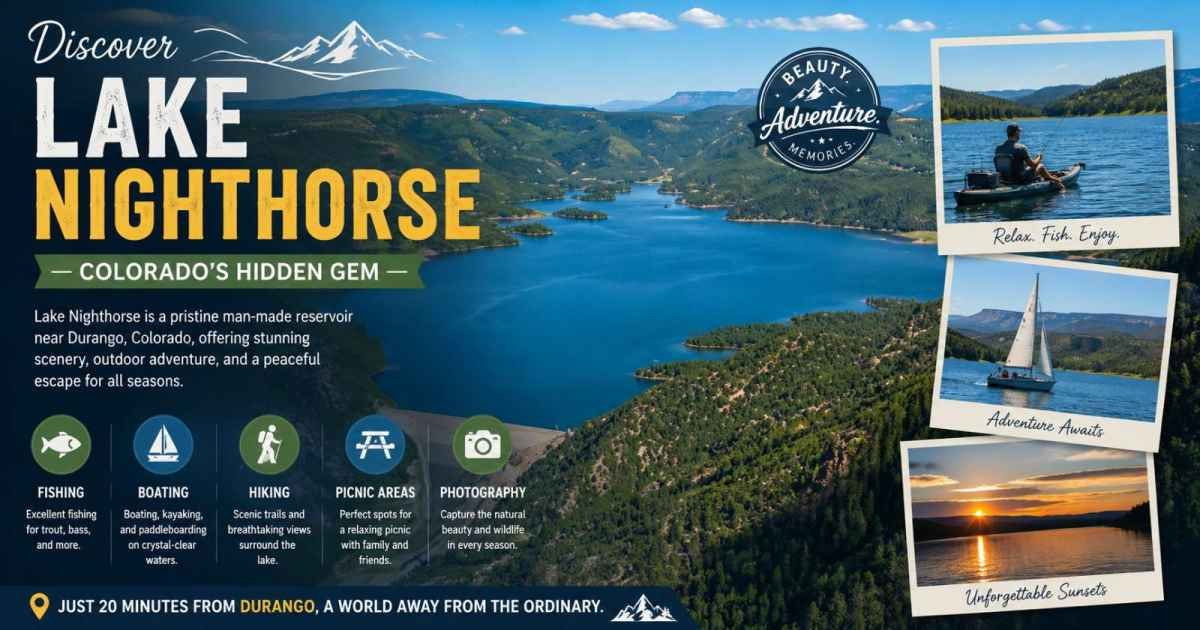
Lake Nighthorse 2026: Complete Visitor Guide, Fees, Fishing, Boating & Things to Do Near Durango
Published

on

Lake Nighthorse 2026: Complete Visitor Guide, Fees, Fishing, Boating & Things to Do Near Durango
Lake Nighthorse is one of Colorado’s newest and most beautiful reservoirs, offering crystal-clear water, breathtaking mountain scenery, and endless outdoor recreation just minutes from Durango. Whether you’re planning a weekend getaway, a family vacation, or a day of fishing and boating, this lake has quickly become one of Southwest Colorado’s top attractions.

Unlike many alpine lakes that require long drives into the Rockies, Lake Nighthorse provides convenient access to fishing, kayaking, paddleboarding, boating, swimming, and hiking only a few miles from downtown Durango. Thanks to its modern facilities, protected shoreline, and excellent fish populations, it continues to attract thousands of visitors every year.

This 2026 Complete Visitor Guide covers everything you need to know, including history, entrance fees, fishing regulations, boating rules, swimming, the Wibit Aqua Park, operating hours, and helpful travel tips.

What Is Lake Nighthorse? History and Overview

Lake Nighthorse was developed by the U.S. Bureau of Reclamation as part of the Animas-La Plata (ALP) Project, a major water storage initiative authorized under the Colorado River Basin Project Act of 1968. Although the project was approved decades earlier, environmental reviews, legal challenges, and funding issues delayed construction for many years.

Construction finally began in 2003, and after the reservoir filled, Lake Nighthorse officially opened to public recreation on April 1, 2018.

Originally known as the Animas-La Plata Water Project, the reservoir receives water from the Animas River and was named in honor of former United States Senator Ben Nighthorse Campbell, recognizing his contributions to Colorado and Native American communities.

When completely full, the lake covers approximately 1,500 acres, making it one of the largest reservoirs in Southwest Colorado. It sits just 2 miles southwest of downtown Durango and is managed by the City of Durango Parks and Recreation Department.

One unique aspect of Lake Nighthorse is its cultural significance. Parts of the surrounding land contain important Native American archaeological sites, so recreation is limited to designated developed areas. Visitors must remain outside the 25-foot protected archaeological buffer zone to help preserve these historic resources.

Lake Nighthorse Location, 2026 Season & Operating Hours

Address:

1795 County Road 210
Durango, CO 81303

Lake Nighthorse operates as a day-use recreation area and is closed during winter to protect wildlife and natural resources.

2026 Recreation Season

April 10 – November 15, 2026

Official 2026 Hours

  • April 10 – May 3
    • Friday–Sunday only
    • 9:00 AM – 4:00 PM
    • Nonmotorized boats only
  • May 8 – May 31
    • Open daily
    • 8:00 AM – 6:00 PM
    • Motorized boating begins May 15
  • June 1 – September 7
    • Open daily
    • 7:00 AM – 7:00 PM
  • September 8 – September 30
    • Open daily
    • 8:00 AM – 6:00 PM
  • October 1 – October 11 and October 16 – November 15
    • Friday–Sunday only
    • 9:00 AM – 4:00 PM

The entrance gate closes 30 minutes before closing time for boat launches and mandatory inspections.

A favorite feature among paddlers and anglers is the lake’s Wakeless Quiet Hours, held every Monday, Wednesday, and Friday from opening until 10:00 AM. During these hours, motorized wake activity is restricted, creating calm conditions for kayaks, paddleboards, canoes, and fishing boats.

The lake closes for the season beginning November 16.

Lake Nighthorse Entrance Fees and Season Passes (2026)

Visitors must purchase a day-use pass upon arrival. Fishing licenses are not included and must be obtained separately through Colorado Parks and Wildlife.

Official 2026 Fees

Pass TypePrice
Daily Vehicle Entrance$10
Daily Walk/Bike Entrance$5
Commercial or School Bus$25
Season Pass (First Household Vehicle)$80
Additional Household Vehicle$40
Senior Season Pass (Age 62+)$70
Additional Senior Vehicle$35
5-Punch Vehicle Pass$40

A 3% processing fee applies to credit and debit card purchases.

Pets are welcome but must remain on a leash, and owners are required to clean up after them.

Fishing at Lake Nighthorse: Species, Regulations & Best Times

Fishing is one of the biggest attractions at Lake Nighthorse.

Since 2011, fisheries managers have stocked the reservoir with several popular game fish, creating one of the area’s most productive fisheries.

Fish Species

  • Rainbow Trout
  • Brown Trout
  • Kokanee Salmon
  • White Suckers
  • Flannelmouth Suckers
  • Fathead Minnows
  • Johnny Darters
  • Crayfish

2026 Fishing Regulations

Every angler 16 years or older must possess a valid Colorado Fishing License.

Current limits include:

  • 4 trout per day
  • 8 trout in possession
  • No size restrictions
  • 10 Kokanee Salmon per day
  • 10 in possession

Additional regulations include:

  • No snagging of Kokanee Salmon during fall spawning.
  • No aquatic live bait is permitted, although traditional baits such as live worms are allowed under Colorado regulations.
  • Fishing from the boat ramp is prohibited.
  • Fish remains must be disposed of in garbage containers rather than returned to the lake.

For accessibility, Lake Nighthorse includes an ADA-accessible fishing dock located beside the main boat ramp.

The best fishing generally occurs early in the morning, especially during late spring and early fall, when Kokanee Salmon are particularly active.

Boating, Kayaking and Water Recreation Rules

Lake Nighthorse welcomes both motorized and nonmotorized watercraft, but protecting water quality remains a top priority.

To prevent the spread of Aquatic Nuisance Species (ANS), every eligible boat undergoes mandatory inspection.

Important Boating Rules

  • Mandatory boat and trailer inspections for all watercraft except hand-launched human-powered vessels.
  • Motorized boats require:
    • Valid state registration
    • Colorado Parks and Wildlife ANS Stamp
  • Open-air exhaust boats are prohibited.
  • Jet skis, personal watercraft, houseboats, and cabin cruisers with internal plumbing are not allowed.

Boat Decontamination

  • Ballasted boats
    • Monday and Thursday–Sunday
    • 8:00 AM – 5:00 PM
    • No decontamination on Tuesdays or Wednesdays
  • Non-ballasted boats
    • Available daily

Within the Open Use Area, all boats must travel counter-clockwise while maintaining No Wake speeds within 200 feet of shore.

Visitors without their own equipment can rent kayaks, paddleboards, and canoes through local outfitters such as 4Corners River Sports, making it easy for beginners to enjoy the lake.

Swimming, Wibit Aqua Park & Family Activities

Swimming is permitted only inside the designated swimming beach, where calm water and safety measures make it ideal for families.

The biggest summer attraction is the Wibit Aqua Park, a floating inflatable obstacle course popular with children and adults alike.

2026 Wibit Aqua Park Information

  • Opens June 1
  • Lifeguards on duty daily from 10:00 AM to 6:00 PM
  • Admission:
    • $5 per person
    • Paid in addition to park entry
  • Maximum:
    • 65 participants per session

Daily Sessions

  • 10:00–11:45 AM
  • 12:00–1:45 PM
  • 2:00–3:45 PM
  • 4:00–5:45 PM

Reservations begin in person at 9:30 AM at the Swim Beach Building.

Visitors should note that the swim beach prohibits:

  • Pets
  • Fishing
  • Glass containers
  • Alcohol
  • Grilling

Several picnic tables are available nearby, making it easy to spend an entire day at the lake.

Best Time to Visit Lake Nighthorse & Visitor Tips

Lake Nighthorse offers something unique during every part of its recreation season.

For visitors seeking the full experience—including motorized boating, swimming, paddleboarding, and the Wibit Aqua Park—the best months are June through early September, when the lake operates its longest daily hours of 7:00 AM to 7:00 PM.

If your goal is peaceful fishing or kayaking, consider visiting on Monday, Wednesday, or Friday mornings during Wakeless Quiet Hours, when the water is exceptionally calm.

Autumn visitors can enjoy spectacular fall foliage, cooler temperatures, and lighter crowds before the season ends in mid-November.

To help preserve this outstanding recreation area, Lake Nighthorse strictly prohibits:

  • Alcohol and illegal drugs
  • Smoking
  • Glass containers
  • Open fires and grilling
  • Off-road vehicles
  • Unauthorized drone use
  • Firearms discharge

Because summer weekends are especially popular, arriving early is highly recommended. Parking and boat launch availability can fill quickly on warm days.

Conclusion

Lake Nighthorse has rapidly become one of Colorado’s premier outdoor destinations, combining modern recreation facilities with stunning natural beauty only minutes from Durango. Whether you want to catch Rainbow Trout or Kokanee Salmon, launch a boat, paddle across calm morning waters, cool off at the Wibit Aqua Park, or simply relax beside a pristine mountain reservoir, the lake offers an unforgettable experience for visitors of all ages.

With affordable entrance fees, excellent amenities, accessible fishing areas, and carefully managed recreation, Lake Nighthorse remains one of Southwest Colorado’s hidden gems in 2026. Pack your fishing license, life jackets, sunscreen, and plenty of water, arrive early during peak season, and enjoy one of Colorado’s finest lakes for a memorable day outdoors.

Continue Reading

Travel

Aztecs Abroad: Uncovering the Lost History of Indigenous Travelers in the Atlantic World

Published

on

aztecs abroad

Introduction

For centuries, the historical narrative of the sixteenth century has been dominated by the story of European explorers and conquistadors crossing the Atlantic to reshape the Americas. From Columbus to Cortés, history has largely been written as a tale of Old World dominance over a supposedly passive New World. Yet this traditional account obscures a fascinating and far more complex reality—one in which thousands of Indigenous people, including the Aztecs of Central Mexico, traversed the ocean in the opposite direction. As diplomats, entertainers, traders, travelers, and, most tragically, as enslaved individuals, Native Americans were not merely passive recipients of transatlantic encounter but active participants in a global exchange that spanned the ocean . The concept of “Aztecs Abroad” challenges conventional wisdom about the nature of the early Atlantic world and reveals a history of Indigenous activity, imagination, and power that has remained largely hidden in the shadows of familiar narratives. Understanding this phenomenon requires a fundamental reimagining of the Atlantic world itself—not merely as a conduit for European imperialism, but as a place of genuine Indigenous agency, influence, and resilience that began in the earliest days of contact and continues to shape our understanding of global history today.

The Rise of the Aztec Empire

Before exploring the remarkable journeys of Aztec travelers abroad, it is essential to understand the civilization from which they emerged. The Aztec empire, which dominated central Mexico during the Late Postclassic period spanning the thirteenth through the early sixteenth centuries, represented one of the most powerful and sophisticated civilizations ever to exist in the Americas. At its height, the empire encompassed some 400 to 500 small states and controlled approximately 5 to 6 million people spread across 80,000 square miles of territory . The capital city of Tenochtitlán, founded in 1325 in the Valley of Mexico’s lake system, was a marvel of urban planning and engineering that dwarfed most European cities of the era, with a population of more than 140,000 inhabitants making it the most densely populated settlement ever achieved by a Mesoamerican civilization . The Aztecs created an intricate society characterized by complex social stratification, a hereditary nobility, a powerful military, and a sophisticated religious and bureaucratic system that included governors, tax collectors, courts of justice, military garrisons, and extensive messenger services . Their remarkable agricultural system, featuring the famous chinampas or “floating gardens,” allowed for intensive cultivation and multiple harvests annually, creating the economic surplus necessary to sustain a powerful and expanding state . The international artistic style that flourished throughout the empire transcended linguistic barriers and created a common cultural language that permeated much of Mesoamerica . This was the civilization—brilliant, powerful, and highly organized—that would be shaken to its core when Spanish explorers arrived in 1519, and it was from this civilization that the first Indigenous travelers to Europe would emerge .

The Conquest and Its Aftermath

The arrival of Hernán Cortés and his Spanish forces in 1519 initiated a collision of worlds that would forever alter the course of human history. The Aztec empire, still expanding when the Spanish appeared, faced an existential threat from a force of approximately 500 European soldiers whose superior weaponry, including crossbows, muskets, steel swords, and armor, along with warhorses and trained dogs, gave them a significant military advantage . Even more devastating was the introduction of deadly European diseases to which the Indigenous population had no immunity, causing catastrophic population decline . However, perhaps the most crucial factor in the Spanish success was their ability to exploit the deep-seated resentment that existed among the many peoples subjugated by the Aztecs themselves—thousands of Indigenous warriors joined the Spanish invaders in their campaign against Tenochtitlán, making the conquest possible . After the death of Montezuma II in Spanish custody and the brutal two-year siege that followed, Tenochtitlán fell to Cortés on August 13, 1521, marking the end of the Aztec empire and the beginning of New Spain . Yet this story, so often framed as one of European triumph and Indigenous defeat, represents only part of a larger narrative—one that extends far beyond the boundaries of Mexico and into the heart of the Atlantic world itself .

Aztecs Abroad: A Forgotten History

The concept of “Aztecs Abroad” represents a radical departure from conventional historical understanding. Caroline Dodds Pennock’s groundbreaking research, published in the American Historical Review, reveals that thousands of Native Americans crossed the Atlantic Ocean during the sixteenth century—many unwillingly as enslaved individuals, but some by choice as diplomats, entertainers, traders, and travelers . These Indigenous travelers operated consciously within structures that spanned the ocean and created a worldview framed in transatlantic terms, actively forging networks that transformed social, economic, political, and intellectual connections across the Atlantic world . The reality is that Indigenous people were not merely static recipients of European influence but purposeful global actors who consciously engaged with the new realities of an interconnected world . Rather than seeing the Atlantic as a body of water that enabled European expansion alone, Pennock argues that historians must reimagine the ocean itself as a place of Indigenous activity, imagination, and power . This perspective moves beyond simply “looking east from Indian country” or recovering the transatlantic journeys of Native people—important though both those projects are—to fundamentally rewrite our understanding of the early Atlantic world as a space of genuine Indigenous agency .

The Roles and Motivations of Indigenous Travelers

The Indigenous people who crossed the Atlantic during the sixteenth century occupied remarkably diverse roles that speak to the complexity of the emerging global order. Among the most visible were diplomats and ambassadors, individuals sent by Indigenous leaders to engage with European courts and authorities, sometimes to negotiate alliances, other times to protest injustices or assert sovereignty . Others traveled as entertainers, performing in European courts and public spaces, while some were traders who actively participated in the emerging transatlantic commercial networks . Perhaps most intriguingly, some Indigenous travelers chose to cross the Atlantic voluntarily, driven by curiosity, ambition, or a desire to understand the world that had intruded so violently into their homelands . Yet the grim reality is that most Indigenous people who crossed the ocean did so in chains, victims of enslavement that became a primary driver of early transatlantic movement . Indigenous enslavement was a harsh truth of the early colonial period, with Native Americans being transported across the Atlantic in significant numbers. However, even in the most tragic of circumstances, these individuals were not merely passive victims—they actively negotiated their circumstances, adapted to new environments, and in some cases, found ways to return home, creating and maintaining connections across the vast distance of the Atlantic .

The Concept of an Indigenous Atlantic

Understanding the phenomenon of Aztecs abroad requires a fundamental reconceptualization of what the Atlantic world actually was during the sixteenth century. Traditional accounts have tended to frame the Atlantic as a place of European activity, a highway that enabled colonizers to project power into the New World and extract resources in return . This perspective marginalizes Indigenous peoples, reducing them to roles as either obstacles to European expansion or passive recipients of cultural contact. Yet the reality is that the Atlantic world was never exclusively European—it was, and remains, a space of multiple complex exchanges involving peoples from all continents that border its waters . The concept of an “Indigenous Atlantic” recognizes that Native Americans actively participated in shaping the social, economic, political, and intellectual networks that spanned the ocean . They created and transformed these networks, not in isolated interactions with Europeans, but in a context of genuine transatlantic engagement that framed their worldview . This is not to say that the power dynamics of the sixteenth-century Atlantic were equal—they most certainly were not, as the brutal reality of enslavement and conquest makes abundantly clear. However, acknowledging Indigenous agency within this unequal system allows for a more complete and nuanced understanding of how the Atlantic world was actually formed .

The Cultural Exchange and Its Enduring Consequences

The journeys of Indigenous travelers across the Atlantic had profound consequences that extended far beyond the individuals involved. These travelers carried with them not only their physical presence but also their languages, beliefs, cultural practices, and worldview, contributing to an intellectual and cultural exchange that transformed both sides of the Atlantic . The Nahuatl language, which was the tongue of both the Aztec and Toltec civilizations, became a lingua franca across an area almost as large as present-day Mexico and influenced languages as far north as the Yellowstone River and as far south as Panama, leaving an enduring linguistic legacy that continues to be felt today . Aztec notions of history, writing, and time, deeply embedded in their complex calendar systems, influenced Mesoamerican culture for centuries, and traces of these intellectual traditions can be found in the ways that later generations understood their world . The artistic and architectural traditions of the Aztecs, which had been central to imperial identity and cultural expression, continued to influence colonial-era art and architecture, demonstrating that the cultural resilience of Indigenous peoples endured even in the face of conquest and colonization . Modern archaeological and ethnohistorical research continues to uncover the complex interactions that characterized the Aztec world and its encounter with the Spanish empire, revealing the deep historical roots and enduring consequences of the Aztec-Spanish conflict that shaped the globalized world we inhabit today . The story of Aztecs abroad is therefore not a mere historical curiosity but an essential part of understanding how our modern world came into being.

Conclusion

The history of the sixteenth century is far richer and more complex than traditional narratives suggest. The concept of “Aztecs Abroad” opens a window into a world where Indigenous peoples were not passive victims or static recipients of European expansion but active participants in the creation of a new global order. Thousands of Native Americans crossed the Atlantic Ocean during this period, some willingly and others as enslaved individuals, taking with them their cultures, languages, and worldviews, and shaping the Atlantic world in ways that continue to resonate today. Recognizing the agency and resilience of these Indigenous travelers fundamentally transforms our understanding of the encounter between Europeans and Native Americans, revealing the story not as one of simple conquest and submission but as a complex and ongoing process of cultural exchange, adaptation, and survival. The Aztec empire may have fallen in 1521, but the people who built that empire did not simply disappear—they adapted, resisted, and in many cases traveled far beyond the borders of their homeland, becoming active participants in the early modern global world. To truly understand the Atlantic world of the sixteenth century, we must look beyond the familiar accounts of European explorers and conquistadors and acknowledge the presence and agency of the Indigenous peoples who crossed the ocean, shaped the emerging global order, and created not one but many Indigenous Atlantics. Their story is an essential part of our shared human history—a history of resilience, adaptation, and the enduring power of human connection across vast distances and challenging circumstances.

Frequently Asked Questions

What does “Aztecs Abroad” refer to?

Aztecs Abroad” refers to the historical phenomenon of Indigenous people from Central Mexico crossing the Atlantic Ocean to Europe during the sixteenth century. This includes diplomats, entertainers, traders, travelers, and enslaved individuals, challenging traditional narratives that portrayed Native Americans as passive recipients of European expansion .

How many Aztecs traveled to Europe?

While exact numbers are difficult to determine, historian Caroline Dodds Pennock’s research reveals that thousands of Native Americans crossed the Atlantic during the sixteenth century, with many coming from Central Mexican “Aztec” regions .

Why did Aztecs travel to Europe?

Indigenous travelers crossed the Atlantic for various reasons, including diplomatic missions, trade, entertainment, and personal choice. Tragically, however, the majority were transported as enslaved individuals, particularly during the early colonial period when Indigenous slavery was common .

Were all Indigenous travelers enslaved?

No. While most Indigenous people who crossed the Atlantic were enslaved, some traveled as diplomats, ambassadors, entertainers, traders, or out of personal curiosity and ambition. These individuals operated consciously within transatlantic structures and actively shaped the emerging global order .

What is the “Indigenous Atlantic” concept?

The “Indigenous Atlantic” is a concept that reframes the Atlantic world not merely as a European space but as a place of Indigenous activity, imagination, and power. It recognizes that Native Americans actively participated in and transformed the social, economic, political, and intellectual networks that spanned the ocean .

How did Aztec travelers influence European culture?

Aztec travelers brought their languages, beliefs, cultural practices, and worldviews to Europe, contributing to intellectual and cultural exchanges that transformed both sides of the Atlantic. Their presence challenged European assumptions and contributed to the development of new ideas about humanity and civilization .

Did any Aztecs return to Mexico after traveling to Europe?

Some Indigenous travelers did find ways to return to Mexico, bringing with them new knowledge and experiences of the European world. These returnees contributed to a transatlantic exchange of ideas that continued to shape both Indigenous and European societies .

What role did enslaved Indigenous people play in the Atlantic world?

Enslaved Indigenous people were essential to the early development of the Atlantic world, but even in slavery, they were not merely passive victims. They actively negotiated their circumstances, adapted to new environments, maintained cultural practices, and sometimes found ways to resist or return home .

How has historical scholarship changed our understanding of Indigenous travelers?

Recent scholarship, particularly the work of Caroline Dodds Pennock and others, has fundamentally transformed our understanding of Indigenous participation in the Atlantic world, revealing that Native peoples were active global actors who shaped and transformed social, economic, political, and intellectual networks across the ocean .

Why is the story of Aztecs Abroad important today?

Understanding the history of Indigenous travelers across the Atlantic is essential for appreciating the complexity of early globalization and for acknowledging the agency and resilience of Indigenous peoples in the face of colonization. It challenges Eurocentric narratives and contributes to a more complete understanding of our shared human history .

Continue Reading

Trending